DrapeCare / Guides
Cleaning drapes in place: what it involves, and when they have to come down
Almost any drape can be cleaned right where it hangs, with very little moisture and no trip to a dry cleaner. Most sheers stay up too; only the occasional sheer with heavy browning or yellowing comes down for a dry cleaning partner. Most drapes are dry in about half an hour.
What stays up and what comes down
Lined panels, pinch pleats, ripplefold, valances, swags, heavy formal drapery and most sheers can all be cleaned on the rod. Once in a while a sheer has to come down, usually when it has heavy browning or yellow discoloration. That fabric is more sensitive and needs a full dry clean, which goes to a local dry cleaning company we partner with, because that work needs a plant we don't run ourselves.
How a visit goes
- Look first. Shoe covers on, then a walk through the room. We identify each fabric and choose the method before any equipment comes in.
- Cover the floor. Drop cloths go down under every window, and anything in the way gets moved.
- Dry soil out. A careful vacuum of every panel, header and pleat, so dust is gone before cleaning starts.
- Clean and lift. A solution matched to the fabric goes on, and a portable extractor pulls it back out. We don't bring a truck-mounted carpet unit to drapes; its suction is strong enough to damage fabric.
- Dress the pleats. Pleats are straightened, and steamed where it helps, so the drapes hang the way they were made to.
- Leave it as we found it. Furniture goes back, the floor is vacuumed, and we walk you through the finished work.
Dry time
Drapes want as little moisture as possible. We use very little water and, most of the time, a solvent that evaporates fast, so most drapes are dry in about 30 minutes. Heavier fabrics can take 1 to 3 hours.
The mistake we see most
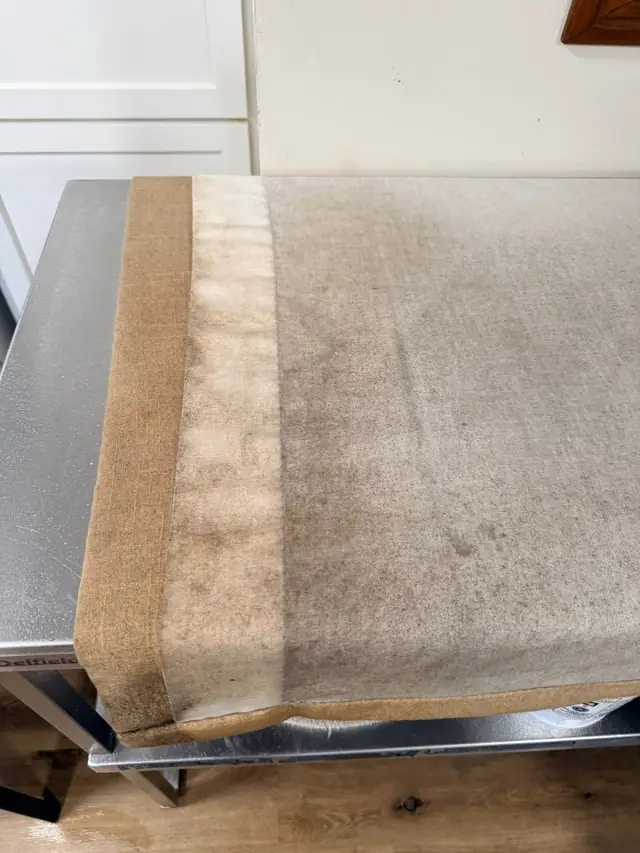
Carpet cleaning products. People reach for what they use on the carpet, but those are made for carpet fiber, not drapery fabric. Too much water is the other one: soaked drapes can shrink, spot or lose their shape.
Tall, heavy and motorized drapery
Much of our work is in large homes, where drapes hang 12 to 16 feet high. That means ladders, panels heavy enough to need two hands, and motorized tracks we work around carefully so the motors aren't harmed. We note which hook goes where, so every pleat sits right when we're done.
The drapes 17 companies turned down
A homeowner in Knoxville had drapes covered in mold that had come out of her HVAC system. She had called 17 other companies, and none would take the job, even with the drapes taken down. We worked alongside the remediation company on the house, cleaned the drapes and got the mold out. She has since had us back for her upholstery and her hardwood floors.
How often
Every 6 to 12 months, the same schedule as your carpets. In a lot of large homes there's little carpet: a wool rug and the drapes do the work. Besides the central air system, they're the biggest dust filters in the house, and everything in the air settles into them.
Cleaning them on that schedule, with a light vacuum in between, keeps dust and allergens out of the air and mold levels down.
Send a photo, get a price
Text a photo of each window or rug, plus the care label if you can find it. We reply with a price range and the next open times, usually the same day.